
ACRILICO SU TELA
30 x 40
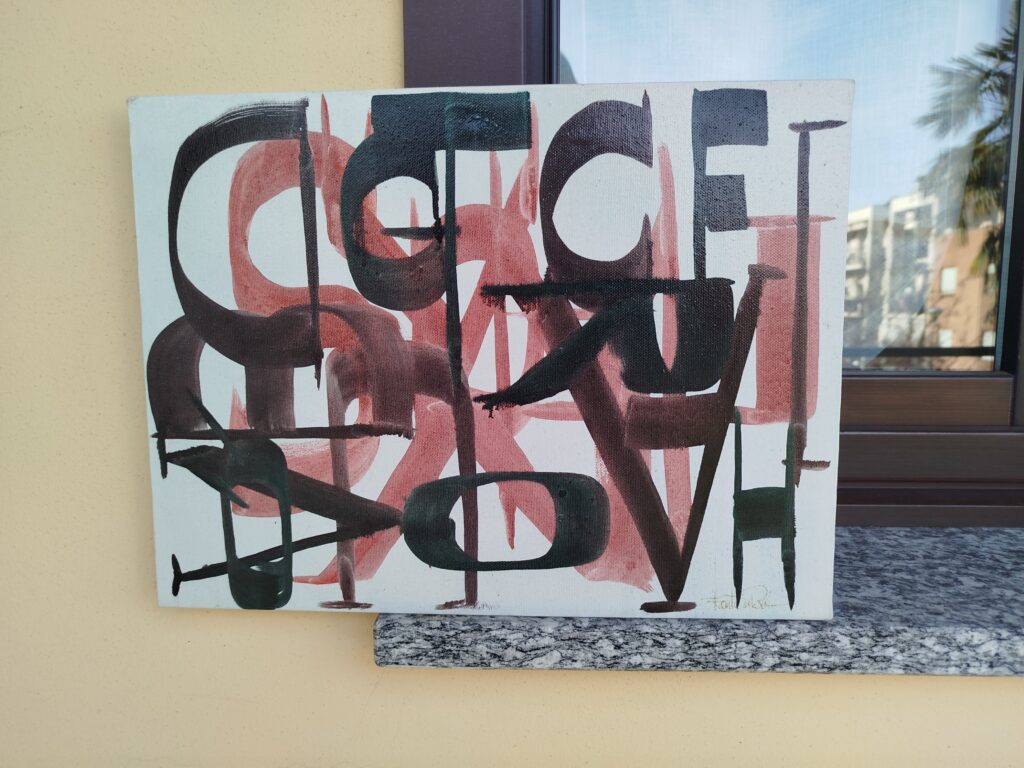
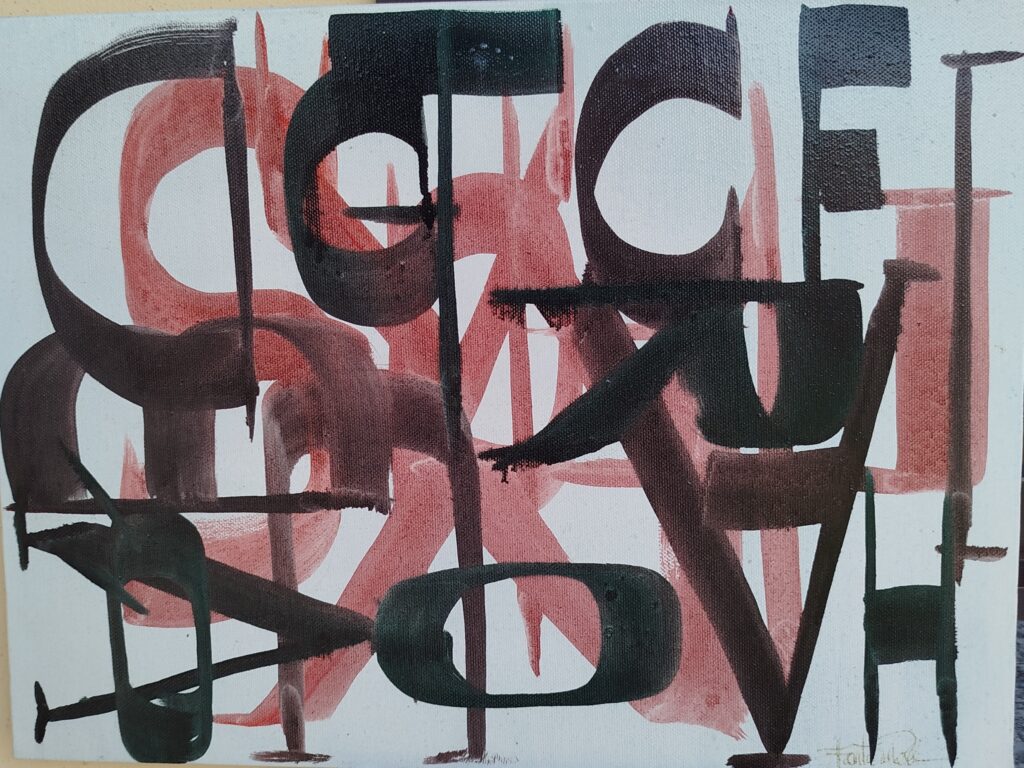
La prima cosa, particolarmente interessante in questo dipinto, è che le forme ricordano lettere, ma non si lasciano leggere completamente. Questo crea una tensione visiva molto bella: l’osservatore cerca spontaneamente un significato, ma è invitato anche ad abbandonare la necessità di trovarlo. Cosi facendo Paolo, in questo dipinto, ha lasciato che il colore ed il gesto prendessero il sopravvento, liberandosi dal bisogno di rappresentare qualcosa di riconoscibile. L’acrilico si è fatto traccia, movimento, impulso, dando vita a un intreccio di forme che sembrano lettere, simboli e frammenti di un linguaggio ancora da decifrare.
Il nero, profondo e deciso, si intreccia con il rosso rosato, più caldo e vibrante, in un dialogo fatto di contrasti, sovrapposizioni e tensioni. Le forme si rincorrono sulla tela, si nascondono, riemergono e talvolta sembrano interrompersi bruscamente, come pensieri che si accavallano nella mente senza trovare subito una direzione. Ogni segno sembra portare con sé una voce, un’emozione, un frammento di qualcosa che affiora dall’inconscio. Le linee verticali e orizzontali cercano un ordine, ma vengono continuamente attraversate da curve, aperture e forme irregolari, come se una parte di lui desiderasse dare struttura al caos, mentre un’altra sentisse il bisogno di lasciarlo libero di esprimersi.
Non c’è un percorso prestabilito per lo sguardo. Ci si muove tra le forme, si cercano connessioni, si immaginano parole che forse non esistono. E proprio in questa ambiguità si riconosce il fascino dell’opera: non dover spiegare tutto, non dover dare un nome a ogni cosa, ma lasciare spazio alle possibilità e alle interpretazioni di chi osserva. La tela diventa così un luogo di incontro tra ordine e disordine, controllo e istinto, pensiero ed emozione. Un piccolo universo in cui i segni sembrano voler comunicare qualcosa, pur conservando il diritto di rimanere misteriosi.
Forse dipingere, a volte, significa proprio questo: dare voce a ciò che si muove dentro di noi senza costringerlo a diventare una parola precisa. Lasciare che il colore parli, che il gesto racconti e che le forme custodiscano ciò che non è ancora pronto per essere svelato. E così, tra il nero e il rosso, tra ciò che appare e ciò che si nasconde, rimane una traccia viva del duo passaggio: un frammento di pensiero trasformato in colore, un dialogo aperto tra lui, la tela e chi avrà voglia di ascoltarla.
ACRYLIC ON CANVAS
30 x 40
The first, particularly compelling aspect of this painting is that the forms resemble letters, yet they cannot be fully deciphered. This creates a beautiful visual tension: the viewer spontaneously seeks meaning, while simultaneously being invited to let go of the need to find it. In this work, Paolo has allowed color and gesture to take center stage, freeing himself from the compulsion to depict anything recognizable. The acrylic paint becomes a trace, a movement, an impulse—giving rise to an interwoven web of shapes that look like letters, symbols, and fragments of a language yet to be decoded.
Deep, bold black intertwines with a warmer, more vibrant rosy red, engaging in a dialogue defined by contrasts, layering, and tension. The forms chase one another across the canvas—hiding, re-emerging, and at times breaking off abruptly—much like thoughts that crowd the mind without immediately finding a clear direction. Each mark seems to carry a voice, an emotion, or a fragment surfacing from the unconscious. Vertical and horizontal lines reach for order, only to be constantly intersected by curves, openings, and irregular shapes; it is as if one part of the artist yearns to impose structure upon the chaos, while another feels the need to let that chaos express itself freely.
There is no predetermined path for the eye to follow. One navigates among the forms, seeking connections and imagining words that may not even exist. It is precisely this ambiguity that constitutes the work’s allure: there is no need to explain everything or to label every element—instead, there is ample space for the possibilities and interpretations brought by the viewer. The canvas thus becomes a meeting point between order and disorder, control and instinct, thought and emotion. A small universe in which signs seem to want to communicate something, while still retaining the right to remain mysterious.
Perhaps painting, at times, means precisely this: giving voice to what stirs within us without forcing it to become a precise word. Letting color speak, letting gesture tell a story, and letting forms hold onto what is not yet ready to be revealed. And so, between black and red, between what is visible and what remains hidden, a living trace of the passage persists: a fragment of thought transformed into color—an open dialogue between the artist, the canvas, and anyone willing to listen.